The great love affair between couture and the grand hotel has always unfolded in lobbies, suites and champagne-scented corridors. The Devil Wears Prada 2 simply made it official. Hamish Kilburn writes…
There is a theory – confirmed by every great editor who has checked in to a corner suite – that the hotel and the couture house are expressions of the same impulse. Both are temples to the idea that the physical world can be arranged, with sufficient will and budget, into something approaching perfection. Both understand that the lobby, like the runway, is theatre. And both have long understood that the right address is a declaration of identity.
Which is perhaps why The Devil Wears Prada 2 – the long-awaited sequel in which Meryl Streep’s Miranda Priestly returns less so to terrorise the fashion world as to protect its integrity – feels, at times, like a glamorous hotel inspection. From the renovated grandeur of Midtown Manhattan to the frescoed salons of Lake Como, the movie traces a geography of aspiration that fashion has mapped, season after season, for a century. Here are the hotels that made the cut.
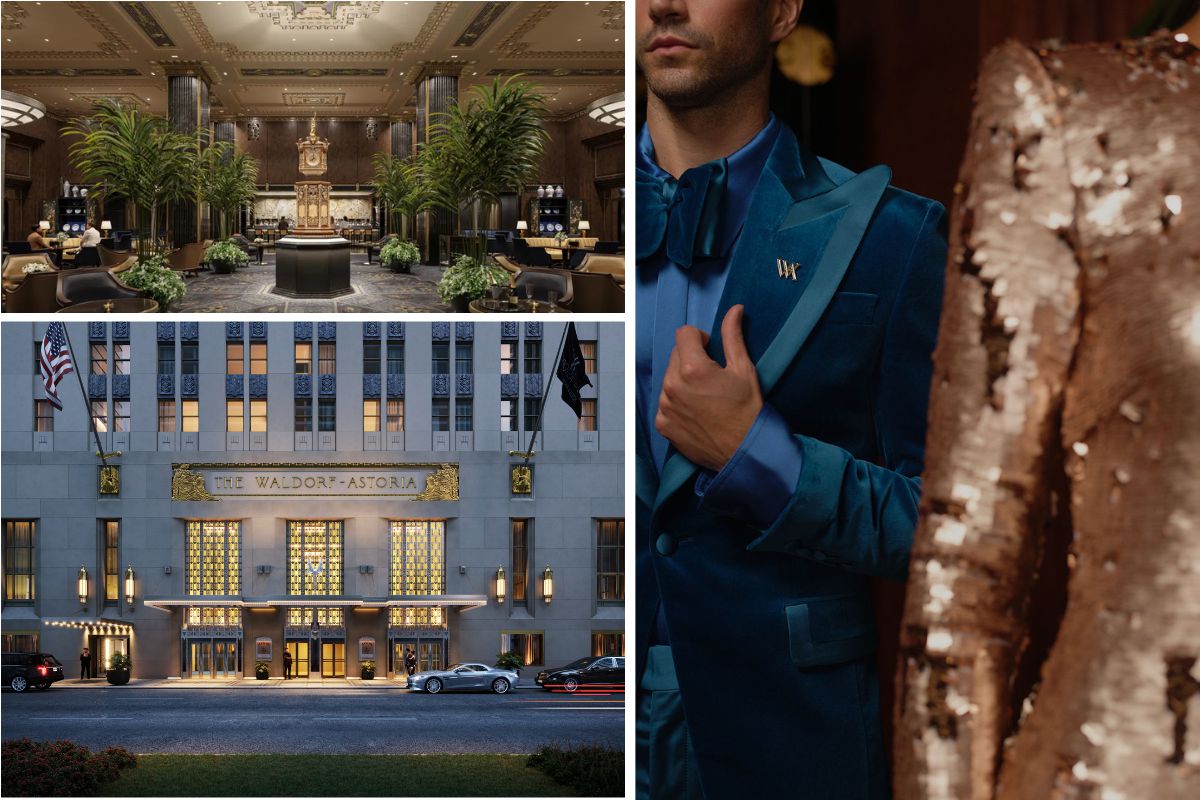
Image caption: Waldorf Astoria New York's grand entrance, its iconic lobby and the hotel's glamorous uniforms designed by Nicholas Oakwell | Image credit: © 2026 Hilton / Waldorf Astoria
The Waldorf Astoria New York – 301 Park Avenue, New York
It is here, in the storied lobby of America’s most mythologised hotel, that bad news is delivered. Nigel (Stanley Tucci, dependably magnificent) receives the crisis threatening Runway magazine within these gilded walls – which feels entirely right. The Waldorf Astoria had been closed for six years of renovations when the production was granted rare access to its lobby; the filmmakers were, by their own account, among the first to film there upon its revival. The Waldorf Astoria is a shrinking violet, said nobody – ever.
The hotel’s staff now move through those gilded corridors in uniforms by Nicholas Oakwell – the British couturier whose house-trained glamour and 1970s-inflected tailoring (think wide lapels, rich palette a silhouette that knows exactly what it is doing) brings precisely the kind of considered theatricality that the Waldorf Astoria has always demanded of its interiors. That the sequel’s central catastrophe should unfurl in a hotel that has itself been resurrected – and redressed – speaks to something the film understands instinctively: in fashion, as in grand hotels, reinvention is survival.

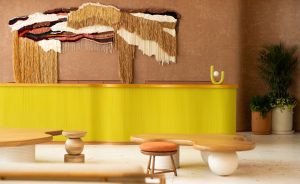
Image credit: A crisp, contemporary suite inside Palazzo Parigi Hotel & Grand Spa | Image credit: Palazzo Parigi Hotel & Grand Spa
Palazzo Parigi Hotel & Grand Spa – Corso di Porta Nuova, Milan
Milan calls for a certain kind of hotel: one that functions simultaneously as sanctuary and statement. The Palazzo Parigi – a private palace of gleaming marble floors, a curved staircase and light-flooded rooms designed by the architect Paola Giambelli, steps from the Quadrilatero della Moda – served as the production’s actual headquarters during the Italian shoot. Tucci and Justin Theroux reportedly took martinis here between takes.
The interiors of the hotel bedrooms, in a pleasing twist, were actually shot in Winfield Hall, the Woolworth Estate in Glen Cove, Long Island – a reminder that in the cinema of luxury, geography is always negotiable.

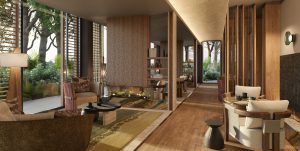
Image credit: The iconic Villa Balbiano in Lake Como has been the backdrop of many cinematic scenes | Image credit: Villa Balbiano / Abercrombie & Kent
Villa Balbiano – Lake Como, Tremezzina
If the Waldorf is the hotel of power and the Palazzo Parigi the hotel of fashion, Villa Balbiano is the hotel of pure, undiluted fantasy. This aristocratic palazzo, dating to the sixteenth century and set directly upon the waters of Lake Como, appears in the film as the lakeside villa of billionaire Benji Barnes (Justin Theroux) – the kind of fictional residence that only makes sense when the actual location is equally improbable.
Villa Balbiano has previous cinematic form: it appeared in Casino Royale and Attack of the Clones. It is the sort of place that fashion has always coveted – and occasionally hired – for its ability to make even the most extraordinary clothes look merely contextually appropriate.
The film’s genius, if we are being architectural about it, is in understanding that fashion has never really been about clothes. It has been about rooms – the right room, at the right hour, with the right light falling across the right marble floor. The Waldorf Astoria’s lobby, the Palazzo Parigi’s staircase, the lake-mirroring terraces of Villa Balbiano: each is a stage upon which identity is performed, revised and, occasionally, rescued.
Miranda Priestly, naturally, already knew this. The rest of us are simply catching up.
Main image credit: © 2026 Hilton / Waldorf Astoria New York