Biomaterials are no new concept in dentistry, but the latest research from the University of California, Irvine frames it in an entirely new way.
According to UC Irvine News, a research team has engineered a yeast platform that helps convert urine from waste water into hydroxyapatite (HAP), a biocompatible substance for use in dental and bone implants.
It can promote tissue growth, and aids bone formation on the implant body.
The material is also hoped to be used in the restoration of archaeological artifacts.
The research features in Nature Communications, and their exciting findings offer clear economic and environmental advantages.
Urine recycling is no new concept, the BBC reports that urine has been used for crop fertiliser, and NASA recycles urine into drinkable water aboard the International Space Station. However, this new concept is worlds away, with an immediate potential use in dental and general healthcare.
The resulting material is projected to hold a market value of more than $3.5 billion by 2030, according to UC Irvine News. Speaking to the outlet, co-author David Kisailus, a UC Irvine professor of materials science and engineering, said:
“On the one hand, it helps remove human urine from wastewater streams, mitigating environmental pollution and the build-up of unwanted nutrients; and on the other hand, it produces a material that can be commercially marketed for use in a variety of settings.”
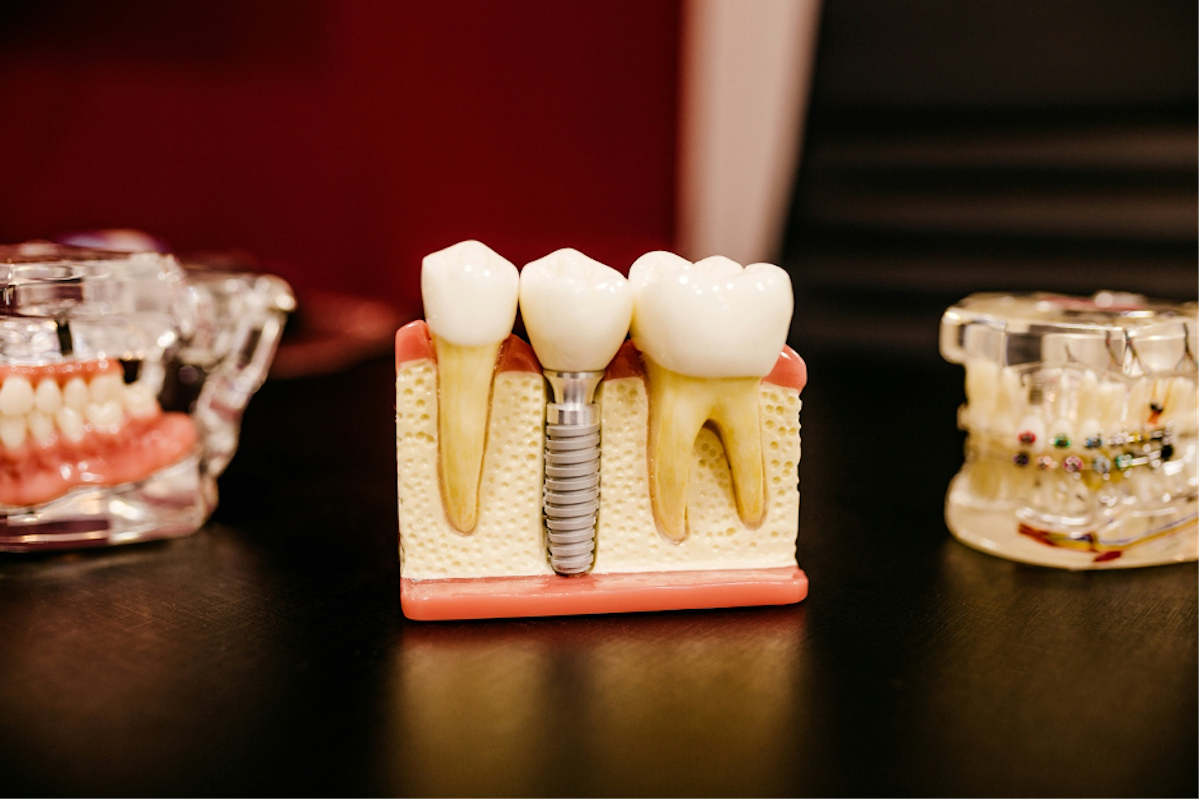
HAP is a material that has also been included in products such as toothpaste. Its use in dental implants is nothing new, but this offers a new approach to producing the material.
The process, in the simplest terms, works through the development of synthetic yeast cells called “osteoyeast” which drive a urine-to-HAP conversion. Mammals use osteoblasts to draw calcium phosphate from bodily fluids to produce HAP, but this is not suitable for large-scale production.
The osteoyeast uses enzymes to break down urea, which increases the pH level. The yeast then accumulates calcium and phosphate, producing HAP in turn.
According to UC Irvine News, the scientists found that one gram of HAP can be produced for every litre of urine.
Biomaterials in dentistry can come from animals, for example with xenografts in bone and soft tissue augmentation, or even from humans through allo- and autografts. However, this research opens up many new doors for biomaterial production.
Who would’ve thought that urine would be the starting point for dental implant production.
>Since you’re here, why not read about how oral microbiomes could affect mental health?
Main image credit: Unsplash